Objects of Desire
Art that never repeats itself: teamLab in Azabudai and Toyosu
teamLab Borderless, a museum without a map, and Planets, where you wade knee-deep through art.

Photo Credit
Image courtesy of © Sasa0403 · CC BY-SA 4.0 via Wikimedia CommonsWhat happens to a museum when the art will not stay in its room? At teamLab Borderless in Azabudai Hills, works drift between spaces and meet one another; at teamLab Planets in Toyosu, you walk barefoot through water while koi turn into flowers at your ankles. Both are rendered live by computer, so no visit is ever quite repeated. Checked against teamLab’s own pages; our Tech list has the gadgets.
A museum without a map
teamLab Borderless calls itself a museum without a map. It opened in Azabudai Hills on 9 February 2024 as a permanent home for the art collective’s work, and its premise is that the art does not stay put: works move out of their rooms, relate to one another, influence each other and sometimes intermingle.
You are expected to wander, explore and get a little lost, which in Tokyo is usually something people pay to avoid. This season the museum shows a special exhibition, On the Asymmetry of the Universe, with a new series, Asymmetric Existence: one light sculpture that exists only in the room and another only in the mirror, together forming a single work.

Seasonal pieces follow the calendar, and in November the programme lists Memory of Topography and Proliferating Immense Life – A Whole Year per Year. An EN TEA HOUSE inside opens 30 minutes after the museum. Hours change on some dates, including late openings and the days around the New Year, so check the calendar before you book.
The map you are not given lists Light Sculpture – Flow, Bubble Universe, Future Park and a Sketch Factory, where drawings made by visitors join the projections. Its full name, on its own pages, is teamLab Borderless: MORI Building DIGITAL ART MUSEUM, and an app lets visitors take part in Infinite Crystal World from their phones.
Knee-deep in koi
teamLab Planets, in Toyosu, is the wetter sibling: a museum where you walk through water. Shoes come off at the lockers, socks too, and in places the water rises to knee height, even for adults. Shorts are lent without charge in sizes XS to 6L: the most thoughtfully stocked wardrobe in Tokyo. Wraps are offered too, because certain rooms have mirrored floors, a detail teamLab mentions with admirable tact.
In Drawing on the Water Surface Created by the Dance of Koi and People – Infinity, koi swim around your legs; when they collide with a visitor they turn into flowers and scatter. The work is rendered in real time by a computer program, neither prerecorded nor looped, so no state of it can be replicated.
Shorts are lent in sizes XS to 6L: the most thoughtfully stocked wardrobe in Tokyo.
Planets runs from 7 July 2018 until the end of 2027, open 8am–10pm, with shorter hours from 31 December to 2 January and last entry an hour before closing. On site there is a Vegan Ramen UZU restaurant and a Living Art Store with its own Sketch Factory, for those who leave wanting to draw a koi of their own.
In The Infinite Crystal Universe, sculpture is built from points of light, and visitors choose stars on their smartphones to throw into it. In Floating in the Falling Universe of Flowers you lie down while flowers bud, bloom and fall around you, and the Moss Garden changes after sunset, when the work begins to glow.
Never the same twice
Why does it matter beyond the photographs? Because both museums make the visitor part of the hardware: your presence steers the koi, the stars and the flowers. It is the opposite of a gallery that asks you to stand back. The computing is constant and invisible, and the art only fully exists while somebody is there to disturb it.
Our advice: book timed tickets on teamLab’s own site, go to Planets in clothes that roll up above the knee, and leave Borderless open-ended, since the whole point is that there is no route. For the devices behind this kind of art, from headsets to phones, our Tech list compares the new kit. Children are welcome at both; teamLab suggests dressing small ones in clothes they don’t mind getting wet, or packing a change.
Why it's on our list
- A museum without a map
- Knee-deep in koi
- Never the same twice
Location
The map comes from Google Maps, which sets its own cookies once it loads.
More in depth
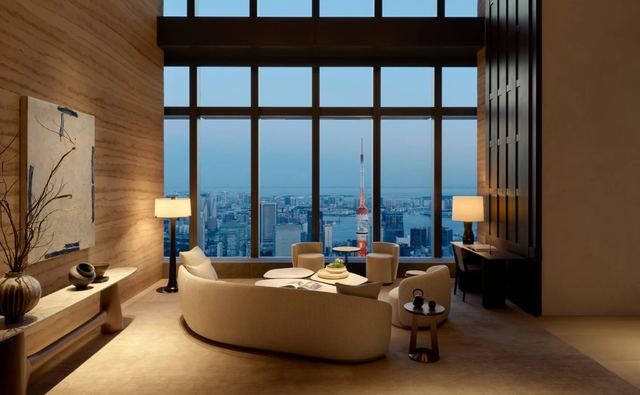 Objects of DesireA village stood on end: Azabudai Hills and Tokyo’s new tower homesAbout eight hectares of garden district, a 330-metre tower and Japan’s highest homes. No prices.
 Objects of DesireSixty millilitres and a stir: the Dry Martini in TokyoThe IBA’s Dry Martini, word for word, and the Tokyo bars that take the stir as seriously as the gin.
 Objects of DesireLess parked than crouched: the electric Jaguar and the new supercarsJaguar’s Type 00 and Type 01, Ferrari’s first electric car and the record-breakers around them.